
Elements and tools: Samin Nosrat and Silksong
Today's newsletter: food writing and gaming as a curious couple.

I’ve just returned from seeing Samin Nosrat in conversation with Tim Mazurek at the Atheneum in Chicago. She spoke about the various challenges of writing her first book, Salt, Fat, Acid, Heat and what they taught her when writing her second, Good Things. She said that the “horribleness” of the process is the point of all this writing.
In a twist that makes sense to anyone who knows me, I am writing more than ever now that I’ve got free, unstructured time and I am not publishing. Mostly, I spend time agonizing over drafts and wondering what’s wrong with me.
As a rule, I grow bored by repeating the same things. In the case of writing, I attempt new genres and styles and two things happen: it take a very long time to publish or I am dissatisfied with the result and stall. Full drafts sit around, waiting for me to remember them. I have a draft of criticism on The Phoenician Scheme. I have city guides for Detroit, New York, and Chicago. I’ve done a ton of reporting on khadi. Despite all the mental space it’s taking up, I’m cycling through them without finishing them. (I will though, I promise)
The issue, I believe, is mentally scaling up too fast and holding experiments to a bar of expertise.
My solution? The obvious one. A weekly newsletter. Draft-y and less edited. Featuring all sorts of Things. While the “horribleness” churns in the background.
Let’s begin.
Samin and the whole food-writing thing
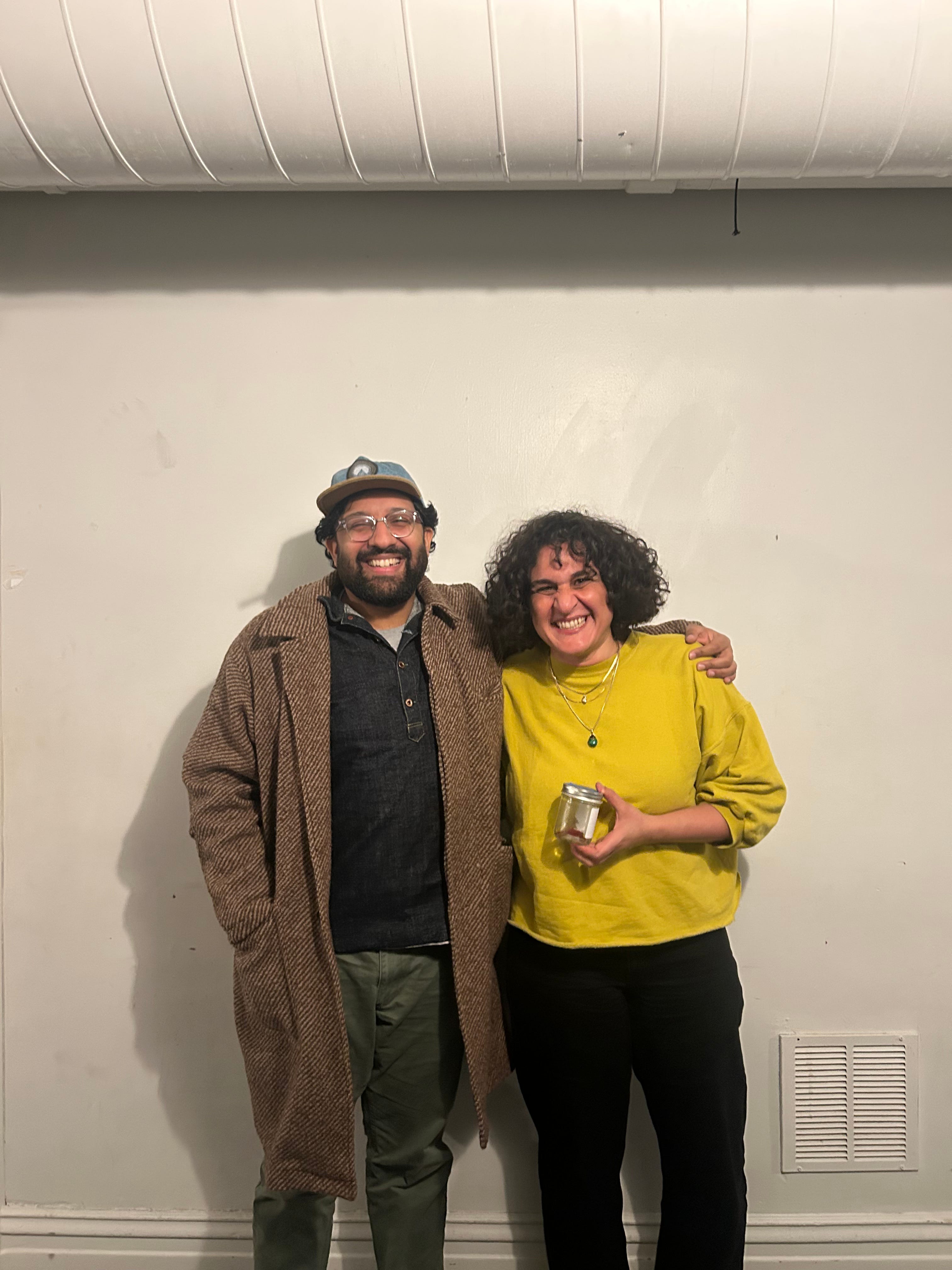
I’m not alone in having been heavily influenced by Samin Nosrat. In my case, however, I believe she was the first Food Person I ever met professionally. I interviewed her in 2018 for See Something Say Something, the podcast I originally hosted at BuzzFeed. She gave the most wonderful hug (seen below). Later, I became her source for a recipe on Chapli Burgers as well as an accompanied story.
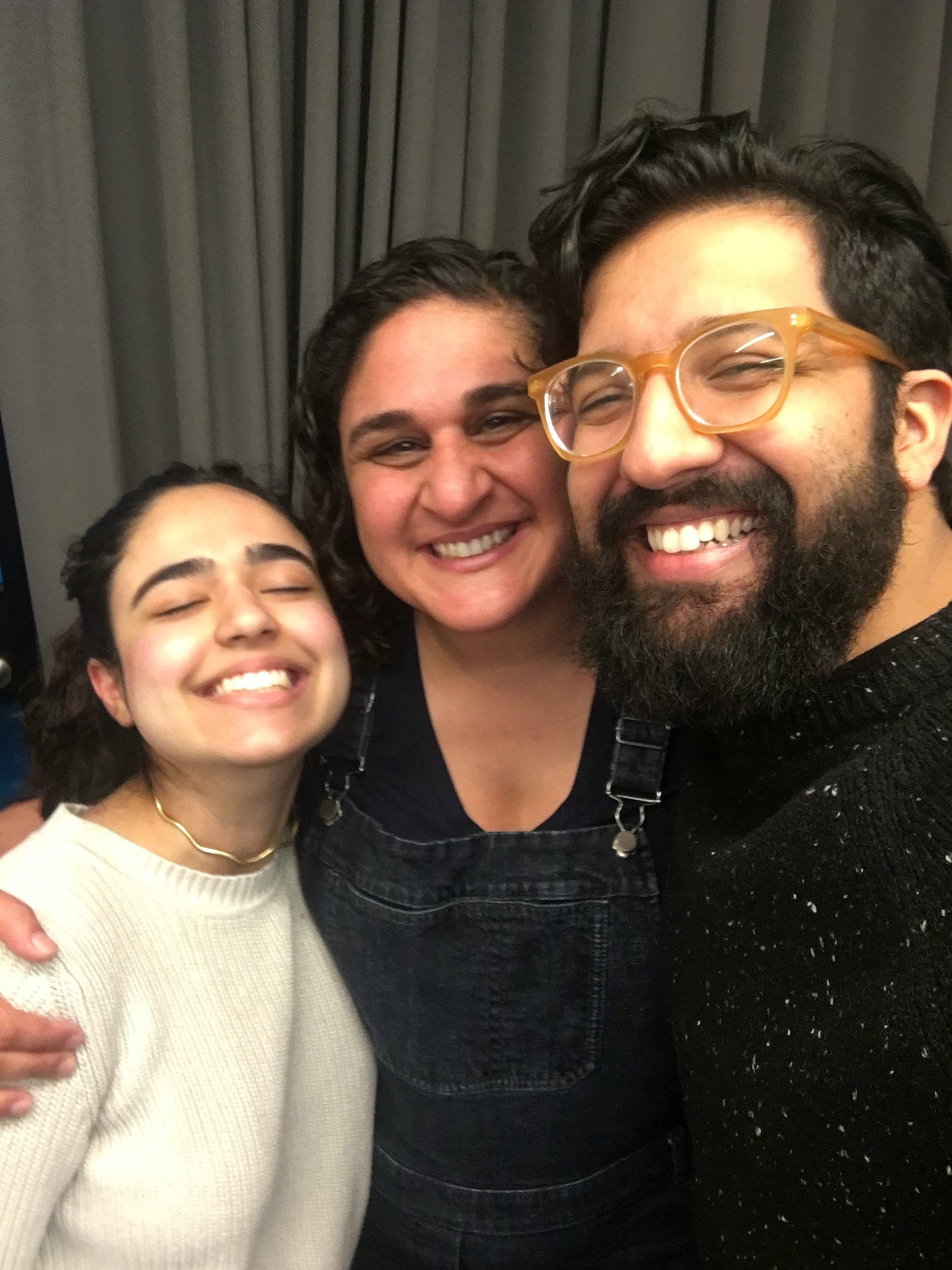
I believe, subconsciously, she modeled what could be possible for me. My understanding is that restaurant cooking was unsustainably stressful for her and writing and teaching became an outlet that channelled that energy. For me, covering American Muslims was too heavy a burden and other kinds of “genre” writing — like food writing — became a way to work on my craft. It also made me more marketable; Islamophilia was only reactionary and temporary, after all. Food is forever.
Anyhow, I thought of Salt Fat Acid Heat as I’ve honed my skills narrative writing. Samin has been an advocate for improvisation and I’m taking the idea that, even without Arguments, I have enough components to make a decent enough dish. I work with components - characters, scenes, growth, and more. In the mix, a story emerges.
The worst part is, this requires writing and re-writing and re-writing - “recipe testing.” Every piece you’ve seen of mine has had it’s spine broken and rearranged and brought back from the brink of incoherence.
tyyy — at the moment of writing this, my daughter is insisting I put her to sleep. We shifted to her bed and as I wrote, she requested: “I press y?” I have allowed her, and “tyyy” is what came about.
All of this is to say, I’m trying a new skill, which is posting the drafts without breaking them. Raw in the CMS. I thought my first step was finding an editor to get to the level of writing quality I’m comfortable with publishing. I’m doing that, sure, and I’m very excited to share some more traditional reporting. But also, I have to re-teach myself how to be a Certified Internet Poster, who can simply produce.
As a journalist, I find food to be a fascinating subject of inquiry when compared to other beats like politics or entertainment — mostly, at all the tropes that people rely on. Food is community. Food brings people together. Food is love. I mean, that is all true. But it’s also true that we dislike foods. Food can be punishment. And food can sometimes be curiously devoid of meaning. Like most mediums, it can encompass a wide variety of things.
I came to food not as a way to promote restaurants, but for a way to tell stories about the characters, ethics, histories, and conflicts of communities I’m in connection with. Don’t get me wrong, I plan to write more about food, of course. But other culture writing is top of mind again.
Ok, I am letting my daughter press y again. yyyyyyyyyyyyyyyyyyyyyyyyyyyy0yyyyyo
I swear to god she pressed every single one of those. Now, I hope she will sleep. A new kind of screentime. Blog time. Rad Brown Dads time.
Things finished: Silksong
One generative thought from my time as a food reporter I’ve been sitting with— fine dining, as a medium, has not embraced an equivalent of Roland Barthes’ “death of the author.” Imagine a preview of a book where the editor begins with, “Jhumpa Lahiri intended this book to be read in it’s original Italian, as it demonstrates the dual possibilities of language.” (I haven’t read any of Jhumpa’s Italian stuff, but I have read a lot of articles about it.) Barthes argues against authorial intent as a empirical way of interpreting writing. But at a fine dining restaurant, you are frequently told how to consume the dish in front of you, the context in which it was conceived, and the order it is best enjoyed.
At my only dinner at a Michelin starred restaurant in the last few years, I slumped through the waiters monologues about the ambition of a certain dish and the many iterations and drafts that led to this particular version. I could barely hear over the din — now, I don’t recall much if anything of those statements of authorial intent. Instead, I recall bits and pieces of the shared story at the dinner table. The food was, to my surprise, incredibly good (partially because, I’m sure, I personally didn’t pay for it). And I couldn’t help but think it’d have been more enjoyable if I hadn’t been guided in interpretation.
I’m not sure where to go with that idea. Perhaps there’s a story. Usually I’d save the idea in my head for years and discuss it with friends. Eventually, I’d find the right characters, news peg, or cultural moment to do a fully considered story. Now, it’s in a newsletter.
In this little valley of writer block, I know that one of the best ways to sharpen your creative instinct is to indulge in acts of artistic merit. Of fine dining, I know quite little. So right now, my indulgence has mostly been in the form of gaming. I’m unemployed, after all. Time to kill the backlog.
But first, a new game. Team Cherry’s Silksong. A game about unusually philosphoical bugs that took almost a decade to make.
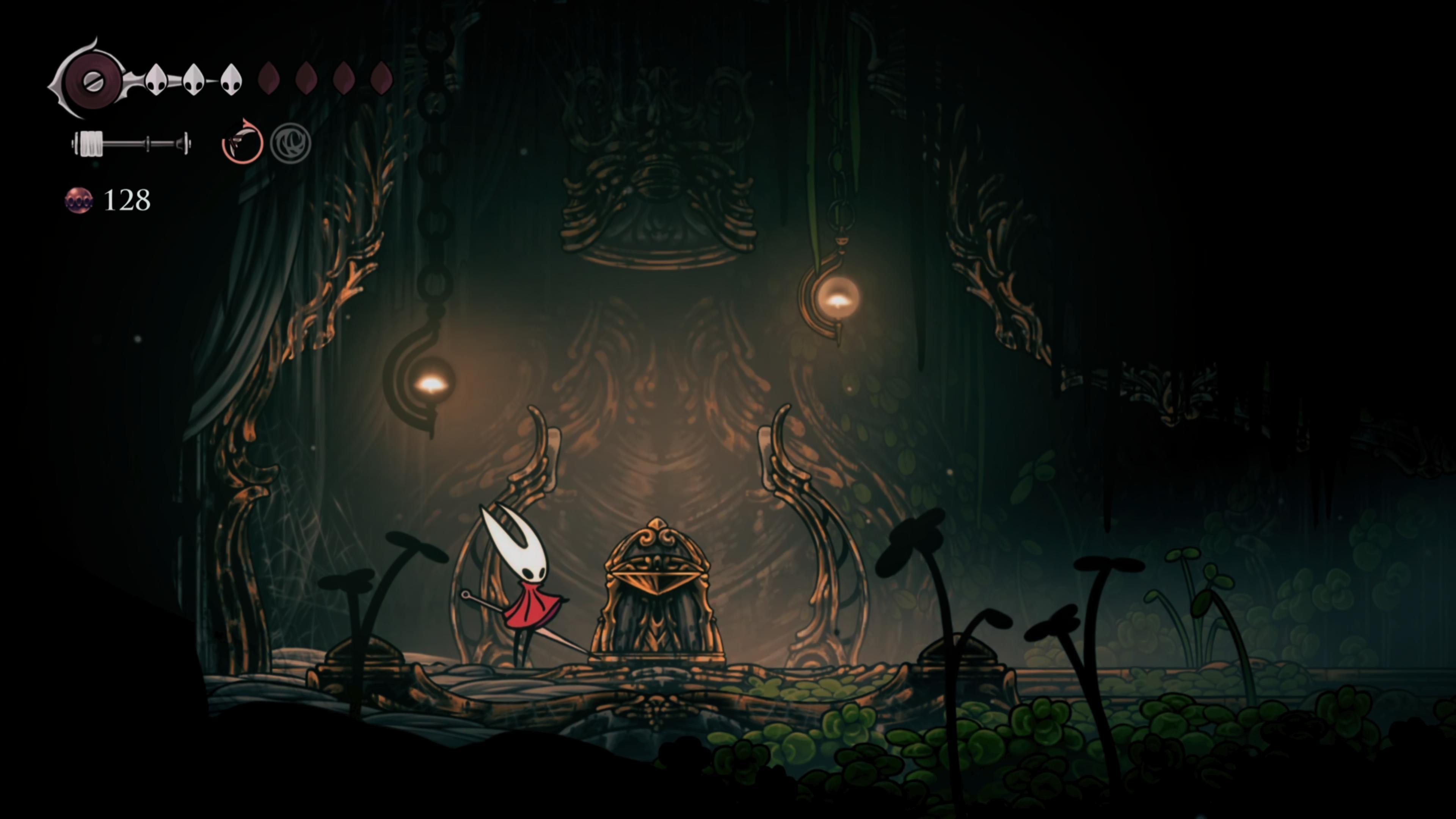
I finished the game last night, getting nearly 100% completion, and defeating the Act 3 boss in more than a dozen tries. I consider it to be a peak experience in its genre, Metroidvanias. For a general audience, I’d describe the genre as a digging or climbing, hunting and gathering, exploration and action genre. You journey through a world with nothing in your pack or your map and by the end, you’ve filled both to the best of your ability. In the case of Silksong, I found it to be more satisfying to summit than it’s predecessor, Hollow Knight. Both are near perfect games to me, but Silksong, as I’ll argue later, is a more coherent package.
Silksong has one fan-response that has dogged it: it’s fucking hard. People quit over it. There’s a particular emphasis on difficult jumps and difficult bosses. In contradiction to fine dining, gaming (or at least traditional console and PC gaming) is a medium where the tyranny of the interpreter has extended horrible tendrils beyond any reasonable measure.
There is a lot of fair criticism, but gamers, literal as they are, tend to veer into hyperbole or binaries: “the designers hate the players.” “Having to repeat an obstacle course to challenge a boss again isn’t good game design.” “It’s frustrating to the level of being insulting.”
Yet, all these arguments ignore something fundamental about gaming, and indeed, any medium. Discomfort, difficulty, and manipulating expectations for the reader are all tools in an expert craftsman’s toolbox. If you’re feeling alienated, it might be worth considering why.
In Silksong, your character, Hornet, is pulled into a religious pilgrimage she neither believes in nor respects. The bugs of this world, armed mostly with only their shells, masks, and adorable voices, are ill-equipped for the journey and religiously opposed to violence. Natural hazards and predators lead to many deaths on the way. Masses of increasingly bizarre corpses build the deeper you go to the world.
At the end of the pilgrimage is the Citadel, where the pure of heart are accepted. Right away, it’s clear the pilgrimage is more of a descent into hell than a climb to heaven. Is that an experience meant for Hornet, the player, or the gestalt of both?
I had several moments where I repeated boss fights over and over and over and over, learning their patterns and shaving off my bad habits in the hopes of eking out a win. I would groan in frustration when I jumped into position that the Savage Beastfly had killed me a dozen or so times before. I’d try to get stronger, rather than get angry. The limitation, I said, was my own. I walked away and returned hours later, beating it in perhaps three tries.

The pilgrimage Hornet is tasked with requires extreme perseverance in the face of irrationality. Our experience of it as gamers is shaped by schema, skills, and self-regulation. As a Muslim and a divinity student, I found a kind of tenderness towards spirituality in the game; despite the obvious corruption of the Citadel in the world of Pharloom, the humble faith of a round bug is dignified, not dismissed as mere opiate. In one missable sequence, a villager may die due to your actions. If you didn’t take the time to speak frequently with them them, you can’t speak up as the body is laid to rest and the crowd is asked for the deceased's name. If you do learn the name, your character speaks up. I did not see the sequence, since I spoke to them enough that they gained the bravery to go on the pilgrimage; they ended up likely dying on the pilgrimage.
The frustration and difficulty of Silksong creates a form of “closure” between myself and Hornet. Scott McCloud’s Understanding Comics introduced me to this idea — that “closure” is what happens between the panels of a comic book to create narrative. Art, dialogue, narration, and empty space combine in your subconcious. In video game criticism, there is a related concept, referred to as the “ludonarrative” — the intersection between gameplay elements and narrative elements. But what I find useful about “closure” is that there’s an element of the psyche filling in the gaps to create meaning.
Some pilgrims must, inevitably, fail. Others, like myself, have the delusion that the pain is worth it.
Lastly, a piece of clothing I’m mad I don’t own: the Carhartt Chore Coat from TCB

I know, this is a pivot. But I spend so much time thinking about clothing I might as well write about it.
As a Michigander, I love Carhartt’s history. I found out, recently, so does the Japanese denim company, TCB Jeans & Co. This piece is inspired by 1920s Carhartt Jackets. I’ve mostly dug as far as the 1980s, looking for American union-made items.
Many of TCBs peers make recreations of old Levis; what I find so interesting about this piece is they’ve adapted a pure Railroad-Core item into something with significant character, moving beyond cosplay. Heart buttons. Wabash stripes that I believe are in the shape of cat paws. The odd collar. I’m not sure I’d be able to even wear it effectively, but I find it opened up a new area in the zone of my preferred aesthetics. It’s also sold out, but messages with TCB indicate it is coming back in forth.
Unfortunately, ending on menswear is going to be a feature of this newsletter, which I plan to release every Thursday. Reported works will also be coming shortly.
-Ahmed
Regarding your over-explained Michelin-starred meal... A few years ago a friend and I got on the topic of "how do you visit a museum" – not "how does one approach" but rather "what's your favorite way". He told me he reads EVERY SINGLE little placard, while his wife barely even looks at the name of the piece and artist.
I thought about it and realized: I enjoy reading the placard, but *only* if I already like/love/am intrigued by the art itself. If the colors or the light or whatever grabs me, then it often deepens my experience to learn that this was painted as a reaction to some life or world event, or part of a series of 47 sketches of the same subject.
BUT, if the art has not grabbed me! I don't really care about the story, and never (yet) has learning more made me more interested in the art.
All this to say, I wonder how your meal would have been different if the backstories and intentions behind the dish were shared as a result of your interest, instead of as an assumption of it.
AHMED I AM GLAD TO HAVE MORE OF YOUR WRITING, KEEP DOING IT AND PRESSING SEND EVEN BEFORE YOU ARE SURE IT'S READY 💞